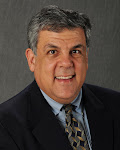
As previously noted, I took a break from the blog when we took a break from the academic part of our visit. Unfortunately, between very spotty internet in Nahariya and our hotel in Tel Aviv coupled with the need to get grades done for my class, I am only returning to my writing tonight. Rather than provide an overly long and overly boring essay, I will start with the weekend activities and begin anew with our activities and impressions on Monday, Tuesday and Wednesday.
Friday morning was dedicated to touring the Old City of Jerusalem. We started in the Jewish Quarter and made our way through the Muslim and Christian Quarters. For those of you who have never been here, the Old City is truly the crossroads of the three monotheistic religions yet all seem to be able to successfully coexist. We started in the Garden Tomb in East Jerusalem then made our way through Herod's Gate and into Muslim Quarter. After walking past store after store and vendor after vendor, we entered the Church of the Holy Sepulcher where we spent a significant time exploring this amazing structure. Once the Old City was done, we gave everyone the afternoon off to spend the rest of the day on their own. In Israel, Shabat effectively begins at 3:00 when almost every retail outlet, bank and restaurant shuts through Saturday at sundown. This was also the day we said farewell to my lovely wife Lydia who had to fly back to Washington that evening.
Saturday we got an early start when we headed south into the Judean desert to visit Masada and the Dead Sea. For those unfamiliar with the story of Masada, you might want to check out http://www.jewishvirtuallibrary.org/jsource/Judaism/masada.html where you can read the complete story. Rather than climb the snake trail up the side of the mountain, we took the tram and had an amazing visit to this truly wondrous sight. Returning from Masada, we stopped at a beach next to the Dead Sea. Located almost 1,400 feet below sea level, it is the lowest spot on earth. A number of our students took a dip in the ultra salty water and then came out to cover themselves in Dead Sea mud. The day was perfectly clear and we could see the coast of Jordan directly across the Dead Sea.
Sunday was a day of transition. We checked out of our hotel to head north but first, we were able to get into the tunnels beneath the Western Wall. Our guide gave us a wonderful introduction to the tunnels and pulled together for us how the Old City has evolved since the time of Herod. We said farewell to Jerusalem and drove north to the north coastal site of Casearea. These old Roman ruins date back to the time of (you guessed it) Herod who found it a convenient port to resupply his efforts to build his little empire. There are a number of lovely little seaside restaurants, art galleries and other vendors. After our visit to Casearea, we drove through Haifa and stopped in Akko for an all too brief visit to this amazing underground city. By all indications, Akko is one of the oldest continuously occupied cities in the world dating back to the time of ancient Egypt and the Pharaohs. Departing Akko after dark, we drove another 45 minutes or so until we arrived at our final destination for the day, Nahariya, a beautiful coastal resort just 10 kilometers (6 miles) from the border with Lebanon. Just a side note, the hotel was hosting a convention of police officers from across Israel and everyone of them was packing heat.
Wednesday, December 21, 2011


Thursday, December 15, 2011
Israel Trip Day 5 - 15 December 2011
Today was less hectic than we had experienced previously. We heard two lectures at Hebrew University and the Braun School of Public Health. The first was jointly conducted by Professor Orly Manor, Dr Amnon Lahad and Dr. Dina Jaffe on the theme of the Community Medicine Quality Standards. In 2004, the Ministry of Health adopted a program for quality indicators in community health care. It was designed to provide consumers and policy makers with information on the quality of community based care delivered by the four HMO's in Israel. Virtually the entire population is part of the database. The data is developed on the basis of: importance/relevance; evidence based; ability to quantify; available electronically; and possible to be implemented. There are six broad measures including: asthma; cancer screening; rate of immunizations for older adults; child and adolescent health; cardiovascular health; and diabetes. A number of quantifiable measures are associated with each measure. The main findings from 2007-09 were that in most areas, healthcare quality had increased over the prior five years and that disparities continue to exist.
The second and final presentation was on economic behavior in Israel's health care system. Dr. Amir Shmeli, a very well known and respected health economist here pointed out that the HMO system was based on managed competition and that risk selection is a crucial part of the larger system. Budgets to the HMO's is based on age based risk insurance adjustment. I am certain that what Dr. Shmeli was presenting was very important but I felt like I needed to be a health economist to understand and appreciate what he was sharing with everyone.
The afternoon took us to a flaffel stand downtown for a particularly yummy lunch then it was off to the Knesset. We were given a guided tour of the Knesset by Daniel who explained very clearly the way in which the Israel Parliament was structured and the way in which Knesset members were elected (by party and not as individuals). He took us to the Plenum and pointed out that the seats for the 120 members were arranged like a menorah. We then went into the Great Hall and stood in awe of three Chagall tapestries along with his mosaics on the floor and the wall. There is a replica of the Proclamation of Independence in the hallway that spells out the key provisions of the State of Israel.
Once done at the Knesset, we headed off for the Old City of Jerusalem and the Western Wall. This was a very emotional time for me when I had the opportunity to leave a note in the Wall for my old friend Steve Elefant and said a prayer for my mother who passed away in April. We were suppose to go through the tunnels beneath the Old City but the reservation was mixed up. Our tour guide Nathan did a very nice job explaining the history of the first and second temples along with the significance of the Christian and Muslim roles in the Old City.
Tomorrow through Sunday are focused on travel and tourism. Monday, we start up the academic part of the program again with a visit to a hospital and community clinic in Nahariya. I will post my next blog on Sunday and share with you our experiences over the weekend.
The second and final presentation was on economic behavior in Israel's health care system. Dr. Amir Shmeli, a very well known and respected health economist here pointed out that the HMO system was based on managed competition and that risk selection is a crucial part of the larger system. Budgets to the HMO's is based on age based risk insurance adjustment. I am certain that what Dr. Shmeli was presenting was very important but I felt like I needed to be a health economist to understand and appreciate what he was sharing with everyone.
The afternoon took us to a flaffel stand downtown for a particularly yummy lunch then it was off to the Knesset. We were given a guided tour of the Knesset by Daniel who explained very clearly the way in which the Israel Parliament was structured and the way in which Knesset members were elected (by party and not as individuals). He took us to the Plenum and pointed out that the seats for the 120 members were arranged like a menorah. We then went into the Great Hall and stood in awe of three Chagall tapestries along with his mosaics on the floor and the wall. There is a replica of the Proclamation of Independence in the hallway that spells out the key provisions of the State of Israel.
Once done at the Knesset, we headed off for the Old City of Jerusalem and the Western Wall. This was a very emotional time for me when I had the opportunity to leave a note in the Wall for my old friend Steve Elefant and said a prayer for my mother who passed away in April. We were suppose to go through the tunnels beneath the Old City but the reservation was mixed up. Our tour guide Nathan did a very nice job explaining the history of the first and second temples along with the significance of the Christian and Muslim roles in the Old City.
Tomorrow through Sunday are focused on travel and tourism. Monday, we start up the academic part of the program again with a visit to a hospital and community clinic in Nahariya. I will post my next blog on Sunday and share with you our experiences over the weekend.
Wednesday, December 14, 2011
Israel trip day 4 - 14 December
We got to experience a number of interesting and important presentations from Yehuda Neumark on Community Oriented Primary Care, Ted Tulchinsky on Changing Concepts and the New Public Health and finally Milka Donchin on Health Promotion in Israel. The most meaningful part for me was the lecture by Dr. Tulchinsky where as part of the new public health, he notes that health system management is a core competency for effective public health particularly in an era of chronic disease, enhanced community health and resource constraints. His book by the same name was released in its second edition last year. The afternoon took all us to Bethlehem where we visited the Church of the Nativity. Traveling in the Palestinian Territorities was an eye-opener for me.
During lunch, we had a lively discussion around a question in which we again sought to compare and contrast the health care delivery systems of both countries. Granted that Israel has but 7.1 million people in a geographic area the size of New Jersey and the United States has over 300 million in a much larger geographic area with a much more heterogeneous population. That said, in 1995, Israel made the political, social and economic decision to craft a national health plan that provided a basket of services to each and every citizen regardless of religious affiliation. While there are additional details mentioned on Day 2, the question is why Israel and not the United States. The one thing that keeps coming up over and over again is social solidarity which I think about as a pre-condition for social capital. There is a sense that people care about one another and will sacrifice a little so that everyone has the essentials. I have a hard time imagining people in the United States agreeing to a basic basket of health services that would be paid by individual taxes. The more I listen to people at the Braun School of Public Health as well as regular Israeli's, the more I am convinced I am that legislation alone will not be enough to create and sustain a universal health plan in the US. What is needed is a change of mind set and perspective that says it is important that we take care of each other and not just maximize our own personal economic and social benefit. How we will get there, I don't know but the journey must begin now.
During lunch, we had a lively discussion around a question in which we again sought to compare and contrast the health care delivery systems of both countries. Granted that Israel has but 7.1 million people in a geographic area the size of New Jersey and the United States has over 300 million in a much larger geographic area with a much more heterogeneous population. That said, in 1995, Israel made the political, social and economic decision to craft a national health plan that provided a basket of services to each and every citizen regardless of religious affiliation. While there are additional details mentioned on Day 2, the question is why Israel and not the United States. The one thing that keeps coming up over and over again is social solidarity which I think about as a pre-condition for social capital. There is a sense that people care about one another and will sacrifice a little so that everyone has the essentials. I have a hard time imagining people in the United States agreeing to a basic basket of health services that would be paid by individual taxes. The more I listen to people at the Braun School of Public Health as well as regular Israeli's, the more I am convinced I am that legislation alone will not be enough to create and sustain a universal health plan in the US. What is needed is a change of mind set and perspective that says it is important that we take care of each other and not just maximize our own personal economic and social benefit. How we will get there, I don't know but the journey must begin now.
Tuesday, December 13, 2011
Israel trip day 3 - 13 December
Another terrific day here in Jerusalem. We started at Hadassah Ein Kerem University Hospital where we arrived a bit early and got to spend some time with the Chagall windows. There was a wonderful narration explaining each of the 12 windows located in the on-hospital synagogue. They absolutely took my breath away. We then moved to the board room where we met Dr. Yuval Weiss, Director of the hospital. Hadassah Hospital was founded in1912 by three American women who were focused on Public Health and women's and children's health issues. Their current building was constructed in 1971 and many of the current med/surg beds will move into their new wing in March 2012. Hadassah serves five roles as a community hospital, tertiary hospital, university teaching hospital, military hospital and research center. Their Ein Karen campus has 775 beds while the Mt. Scopus campus has 320 beds. Their funding was particularly interesting. Revenue from patient care pays for general operations while building, equipment and all research is funded by fundraising and development.
We were taken on a tour of the hospital where we got to see their new pediatric children's wing. A particularly interesting attribute is that the waiting area and play area can quickly be transformed into an emergency room complete with oxygen, air and suction. Our visit to the Emergency Room showed us a facility that was fully equipped to withstand a direct attach from a chemical, nuclear or biological weapon. This was truly an amazing organization whose existence is due in large part to the generosity of persons around the world.
The morning class took place in the Braun School of Public Health and was conducted by David Chinitz, Professor of Health Policy. His lecture compared and contrasted the characteristics of the US health care system with those in Europe and Israel from 1990-2010. Among the many distinctions between these systems of financing and delivery of care, one stood out for me. Dr. Chinitz talked about the theme of social solidarity being a critical attribute in the European and Israeli systems. Social solidarity is about the willingness of a society to consciously do for one another and that the role of government is to assure a basic level of services for everyone even if it means that those more well off have to provide a little bit more. A more complete reference can be found in the Summer 2010 issue of the Journal of Health Politics, Policy and Law.
Our day ended at Yad Vashem, the Holocaust Memorial. While similar to the US Holocaust Memorial in Washington, DC Yad Vashem is a required stop for all dignitaries visiting Israel. I was moved beyond words and continue to wonder there are so many people who want to continue the work the Hitler and the Third Reich started. I could have spent the entire day going from one exhibit to the next.
We were taken on a tour of the hospital where we got to see their new pediatric children's wing. A particularly interesting attribute is that the waiting area and play area can quickly be transformed into an emergency room complete with oxygen, air and suction. Our visit to the Emergency Room showed us a facility that was fully equipped to withstand a direct attach from a chemical, nuclear or biological weapon. This was truly an amazing organization whose existence is due in large part to the generosity of persons around the world.
The morning class took place in the Braun School of Public Health and was conducted by David Chinitz, Professor of Health Policy. His lecture compared and contrasted the characteristics of the US health care system with those in Europe and Israel from 1990-2010. Among the many distinctions between these systems of financing and delivery of care, one stood out for me. Dr. Chinitz talked about the theme of social solidarity being a critical attribute in the European and Israeli systems. Social solidarity is about the willingness of a society to consciously do for one another and that the role of government is to assure a basic level of services for everyone even if it means that those more well off have to provide a little bit more. A more complete reference can be found in the Summer 2010 issue of the Journal of Health Politics, Policy and Law.
Our day ended at Yad Vashem, the Holocaust Memorial. While similar to the US Holocaust Memorial in Washington, DC Yad Vashem is a required stop for all dignitaries visiting Israel. I was moved beyond words and continue to wonder there are so many people who want to continue the work the Hitler and the Third Reich started. I could have spent the entire day going from one exhibit to the next.
Monday, December 12, 2011
Israel trip day 2 - 12 December
Everyone met for a very good breakfast at 7:00 at the hotel then we boarded the van to drive over to Hebrew University's campus at Hadassah Hospital in West Jerusalem. We were met by Professor David Chinitz who provided an introduction to the day's speakers. We led off with a summary of payment and delivery of health services in Israel by Dr. Leon Epstein. Among the things we took away was the passage in 1994 of the National Health Insurance Law that was based on the principles of "justice, equity and solidarity." The law provides for a number of important attributes:
Alex Leventhal, former head of Israel's Public Health Ministry and now in charge of international realtions for the Ministry of Health shared his perspective on the fact that Israel is now part of the OECD and is considered to possess one of the best health systems in the world.
Hagai Levine, a new faculty member in the Braun School shared his perspective on the role that environmental health played particularly around a process called a health impact assessment or HIA. The purpose of the HIA is to examine how policy affects the health of a population and the distribution of those effects in the population. Just imagine how different US health care would be were an HIA done prior to the passage of a particular piece of health legislation.
Finally, we were joined by a large group of International MPH students for the final lecture by Schlomo Mor-Yosef, President of the National Institute for Health Policy Research. He led off with an in depth conversation about the after affects of the recently settled Israeli physicians strike (more on that later). As a result of the National Health Insurance law, 0.1% of the tax is dedicated to conduct research, evaluation and policy oriented studies and seminars on the impact of the law and development of the health care system in Israel. The Institute exists as a independent, non-profit research center beholden to no one.
After a long day in the classroom we were escorted up to Mt. Olives, overlooking the Old City from the East. We heard about the creation of the modern state of Israel along with the history of the Old City from biblical times forward.
At the end of the day, Director Manor hosted a reception for her faculty, our students and the 36 or so students in the International MPH. It was a wonderful evening (thanks to Arthur Shorr for being our expert photographer) capped by a short presentation by Director Manor's husband who serves as a senior official in Israel's foreign ministry and is the former ambassador to Sweeden.
Overall a busy but truly memorable day!
- Universal coverage for all citizens of Israel
- Payment by a progressive health tax paid by individual taxpayers and not employers
- Standardized basket of health services
- Capitation to four HMO's or Kaupt Holim (sick fund)
- Significant problem with shortages of physicians and nurses
- Areas of major health inequality
- The percentage of out of pocket funding for health care continues to rapidly increase
Alex Leventhal, former head of Israel's Public Health Ministry and now in charge of international realtions for the Ministry of Health shared his perspective on the fact that Israel is now part of the OECD and is considered to possess one of the best health systems in the world.
Hagai Levine, a new faculty member in the Braun School shared his perspective on the role that environmental health played particularly around a process called a health impact assessment or HIA. The purpose of the HIA is to examine how policy affects the health of a population and the distribution of those effects in the population. Just imagine how different US health care would be were an HIA done prior to the passage of a particular piece of health legislation.
Finally, we were joined by a large group of International MPH students for the final lecture by Schlomo Mor-Yosef, President of the National Institute for Health Policy Research. He led off with an in depth conversation about the after affects of the recently settled Israeli physicians strike (more on that later). As a result of the National Health Insurance law, 0.1% of the tax is dedicated to conduct research, evaluation and policy oriented studies and seminars on the impact of the law and development of the health care system in Israel. The Institute exists as a independent, non-profit research center beholden to no one.
After a long day in the classroom we were escorted up to Mt. Olives, overlooking the Old City from the East. We heard about the creation of the modern state of Israel along with the history of the Old City from biblical times forward.
At the end of the day, Director Manor hosted a reception for her faculty, our students and the 36 or so students in the International MPH. It was a wonderful evening (thanks to Arthur Shorr for being our expert photographer) capped by a short presentation by Director Manor's husband who serves as a senior official in Israel's foreign ministry and is the former ambassador to Sweeden.
Overall a busy but truly memorable day!
Friday, December 9, 2011
Blogging from Israel
From December 11-24, a group of students and other HSML faculty will be in Israel studying their healthcare delivery system. Look for regular updates as we spend time with the faculty and students of the Braun School of Public Health at Hebrew University in Jerusalem.
Tuesday, September 1, 2009
Linking health management with health reform
President Obama has made health care reform the cornerstone priority for his administration. An indicator of the seriousness that he is placing on health care is the quality of the persons that he has selected to fill important decision making roles who will be tasked with reshaping the healthcare payment and delivery systems. By and large, these appointees are individuals with great skill and experience in the areas of health policy or health economics.
I do not question for even a moment that meaningful health care reform needs to be established on sound economic principles and based on policies that can be agreed to by the largest number of key stakeholders. However, from our perspective, there is an important element that is missing from the public conversations about health care reform. Where is the discussion about the impact of health reform on the organization and, more importantly, the patient.
We must recognize that policies and economic decisions made without consideration to implementation at the organizational level and ultimately at the bedside are a serious oversight. The law of unintended consequences reminds us that policies or actions taken without thinking through how those actions might affect real people can play out in ways that have unplanned and often serious outcomes. As President Obama and members of the executive and legislative branches think through the myriad of ways that health care might be reformed, we recommend that the following points be kept in mind with the respect to the implementation of any chosen policy:
Strive for Excellence
No one wants average or even good health care for themselves or their families. There is a general expectation that health care received in the United States will be uniformly excellent. The question then is--how do we define and operationalize excellence? In our experience, clinical excellence (usually thought of as the outcome) is a necessary but not sufficient condition. In addition, patients want and expect to be treated with dignity and respect, in a culturally appropriate manner, in settings that are clean and accessible. And outstanding patient experiences do not take place without staff who feel valued, are given the tools they need to do their job, and are surrounded by other high performing colleagues.
Chaos and Complexity
A hallmark of US health care is that it is a series of interconnected systems as opposed to "the US Healthcare System". The implication for health policy reform is that optimization of a single component of the system (whether at the macro level involving access, costs, and outcomes, or at a micro level of direct services provision) has the potential to simultaneously create both improvements and disruptions in intended changes. The inherent chaos embedded in a structure of variability requires that policy change provide for substantial flexibility at the operational level to both create positive enhancements to the provision of health care and to minimize the negative effects deriving from sweeping change. An example of this is seen in the efforts of hospitals to reduce unintended deaths and injuries during the time a person is in the hospital. Rather than think about health care delivery as a whole set of interrelated subsystems, most efforts in this area still attempt to find the person who made the error and fix what went wrong in that specific instance. We retain the old maxim of "blame and shame" or "blame and train" rather than look more critically at the larger system.
All Health Care (or at least most) is Local
Meaningful change in an environment as fragmented and diverse as the American health care industry will require implementation of and experimentation with multiple potential solutions. The state-level reforms that have promise in Oregon and Massachusetts may not be feasible in West Virginia or New York. Broad national mandates across large population segments will likely guarantee less than optimal care delivery n regional or local settings. Extensive input from health care providers at the state and local level will be required to insure that health care networks are not made less responsive as a result of national policy. The development Regional Health Information Organizations (RHIOs) show promise as a mechanism to coordinate national policy imperatives while incorporating variation in health services delivery mechanisms at a local level.
Healthcare is an Industry
Health policy is obviously directed at improving the health status of our citizens, but the implementation of policy must recognize the economic realities the health care sector. The mantra "no margin, no mission" acknowledges the importance of profit motives as drivers of organizational performance, regardless of the legal and tax status of the health care entity providing services. And business competency is no more a given in this industry than in others such as finance, banking, housing, and retail, where seismic changes have resulted in long-standing, ostensibly well-managed corporations disappearing virtually overnight. The health care industry is not immune to these potential disruptions, regardless of the intent of policy implementers to create a rational "system".
Think Outside the Box
Is there a way to deliver care that is timely, efficient, safe, and effective and yet works to address the terrible stress on hospitals and physicians caused by the growing number of elderly coupled with 45 million uninsured Americans? Using the current models of care (private physician office practices and private hospitals) is one answer but this is not sufficient. Instead, we need to think about non-traditional ways to deliver care. These can be in pharmacy based clinics, urgent-care centers, public health clinics, or any number of alternative delivery settings. Again, solutions should consider the needs and resources of local populations. The current excitement over the concept of a patient-centered medical home is no more the ultimate solution to the efficient delivery of health care services than was the gatekeeper model of capitated care in the 1990's. However, the goals of this approach, such as avoiding duplication of services, helping to eliminate medication errors, coordinating the timely dissemination of crucial medical information, and reducing administrative costs utilizing a comprehensive electronic health record are clearly what we want to achieve.
There is no question that comprehensive health care reform has to begin with careful consideration of policy and economic questions. However, health care reform without equally careful attention paid to where and how care is delivered will result in the sub-optimization and ultimate failure of even the best-intended policies. We urge President Obama, Nancy-Ann DeParle, newly appointed director of the White House Office for Health Reform, HHS SecretarySebelius and other key decision leaders to include examination of the structures of health care delivery as part of their deliberations.
I do not question for even a moment that meaningful health care reform needs to be established on sound economic principles and based on policies that can be agreed to by the largest number of key stakeholders. However, from our perspective, there is an important element that is missing from the public conversations about health care reform. Where is the discussion about the impact of health reform on the organization and, more importantly, the patient.
We must recognize that policies and economic decisions made without consideration to implementation at the organizational level and ultimately at the bedside are a serious oversight. The law of unintended consequences reminds us that policies or actions taken without thinking through how those actions might affect real people can play out in ways that have unplanned and often serious outcomes. As President Obama and members of the executive and legislative branches think through the myriad of ways that health care might be reformed, we recommend that the following points be kept in mind with the respect to the implementation of any chosen policy:
Strive for Excellence
No one wants average or even good health care for themselves or their families. There is a general expectation that health care received in the United States will be uniformly excellent. The question then is--how do we define and operationalize excellence? In our experience, clinical excellence (usually thought of as the outcome) is a necessary but not sufficient condition. In addition, patients want and expect to be treated with dignity and respect, in a culturally appropriate manner, in settings that are clean and accessible. And outstanding patient experiences do not take place without staff who feel valued, are given the tools they need to do their job, and are surrounded by other high performing colleagues.
Chaos and Complexity
A hallmark of US health care is that it is a series of interconnected systems as opposed to "the US Healthcare System". The implication for health policy reform is that optimization of a single component of the system (whether at the macro level involving access, costs, and outcomes, or at a micro level of direct services provision) has the potential to simultaneously create both improvements and disruptions in intended changes. The inherent chaos embedded in a structure of variability requires that policy change provide for substantial flexibility at the operational level to both create positive enhancements to the provision of health care and to minimize the negative effects deriving from sweeping change. An example of this is seen in the efforts of hospitals to reduce unintended deaths and injuries during the time a person is in the hospital. Rather than think about health care delivery as a whole set of interrelated subsystems, most efforts in this area still attempt to find the person who made the error and fix what went wrong in that specific instance. We retain the old maxim of "blame and shame" or "blame and train" rather than look more critically at the larger system.
All Health Care (or at least most) is Local
Meaningful change in an environment as fragmented and diverse as the American health care industry will require implementation of and experimentation with multiple potential solutions. The state-level reforms that have promise in Oregon and Massachusetts may not be feasible in West Virginia or New York. Broad national mandates across large population segments will likely guarantee less than optimal care delivery n regional or local settings. Extensive input from health care providers at the state and local level will be required to insure that health care networks are not made less responsive as a result of national policy. The development Regional Health Information Organizations (RHIOs) show promise as a mechanism to coordinate national policy imperatives while incorporating variation in health services delivery mechanisms at a local level.
Healthcare is an Industry
Health policy is obviously directed at improving the health status of our citizens, but the implementation of policy must recognize the economic realities the health care sector. The mantra "no margin, no mission" acknowledges the importance of profit motives as drivers of organizational performance, regardless of the legal and tax status of the health care entity providing services. And business competency is no more a given in this industry than in others such as finance, banking, housing, and retail, where seismic changes have resulted in long-standing, ostensibly well-managed corporations disappearing virtually overnight. The health care industry is not immune to these potential disruptions, regardless of the intent of policy implementers to create a rational "system".
Think Outside the Box
Is there a way to deliver care that is timely, efficient, safe, and effective and yet works to address the terrible stress on hospitals and physicians caused by the growing number of elderly coupled with 45 million uninsured Americans? Using the current models of care (private physician office practices and private hospitals) is one answer but this is not sufficient. Instead, we need to think about non-traditional ways to deliver care. These can be in pharmacy based clinics, urgent-care centers, public health clinics, or any number of alternative delivery settings. Again, solutions should consider the needs and resources of local populations. The current excitement over the concept of a patient-centered medical home is no more the ultimate solution to the efficient delivery of health care services than was the gatekeeper model of capitated care in the 1990's. However, the goals of this approach, such as avoiding duplication of services, helping to eliminate medication errors, coordinating the timely dissemination of crucial medical information, and reducing administrative costs utilizing a comprehensive electronic health record are clearly what we want to achieve.
There is no question that comprehensive health care reform has to begin with careful consideration of policy and economic questions. However, health care reform without equally careful attention paid to where and how care is delivered will result in the sub-optimization and ultimate failure of even the best-intended policies. We urge President Obama, Nancy-Ann DeParle, newly appointed director of the White House Office for Health Reform, HHS SecretarySebelius and other key decision leaders to include examination of the structures of health care delivery as part of their deliberations.
Subscribe to:
Posts (Atom)